When an automatic feeder loses power, the result depends on its design, food type, and backup system. The display may go dark immediately, while a battery-supported clock continues counting. Some models keep scheduled meals; others stop mid-cycle or release nothing. That difference matters. A missed meal can leave a pet waiting beside an empty bowl, especially overnight.
This guide explains what happens if power goes out on automatic feeder and how to assess the risk calmly. It examines battery backup, memory retention, motor behavior, portion controls, and notification features. A feeder with dry kibble may remain usable for several hours, but wet food can spoil quickly without cooling. A jammed chute creates another problem: power may return, yet food still cannot move. Veterinary guidance should take priority when an animal needs timed meals or medication.
Reliable guidance starts with the manual and a simple live test. Unplug the unit, check whether the schedule remains stored, and observe the next feeding cycle. Keep a measured backup portion nearby. Do not assume a new battery is healthy; stored batteries can weaken. Manufacturer claims are useful, but real conditions expose gaps. Room temperature, food size, and cleaning habits all change performance. If the feeder is essential, confirm its behavior before leaving an animal alone for a long period. Be cautious. Small oversights can matter.
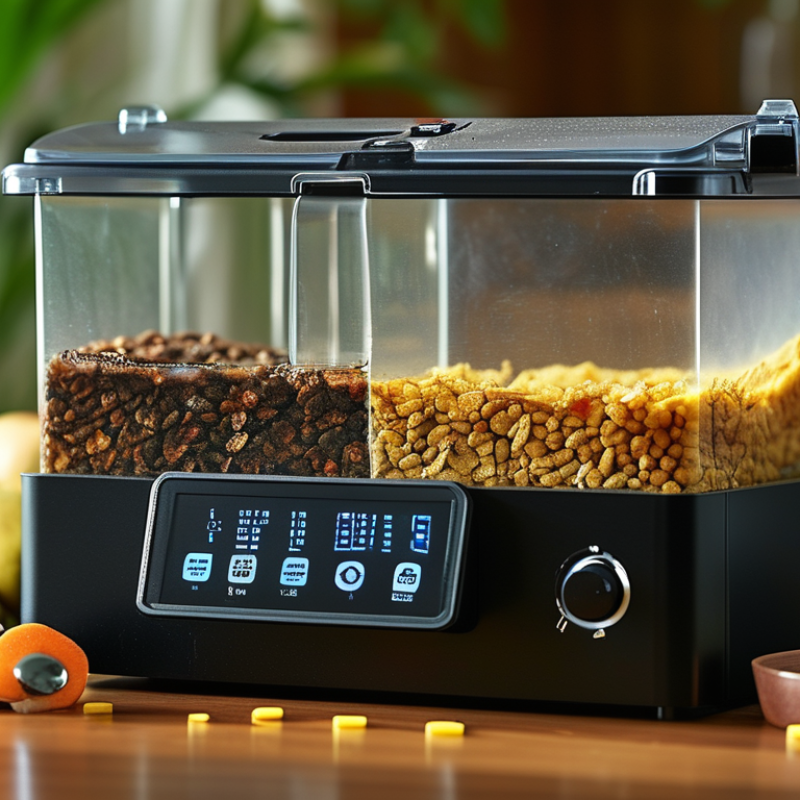
What Happens If Power Goes Out on an Automatic Feeder?
How an Automatic Feeder Responds When the Power Fails
When electricity fails, an automatic feeder usually stops its motor immediately. The display may go dark, and the next scheduled portion may not dispense. Some models use battery backup to preserve the clock and feeding schedule. Others restart only after power returns. The motor stops. That difference matters.
The U.S. Energy Information Administration reported an average customer interruption of about 5.5 hours in 2022, including major events. A feeder without backup power may miss several meals during a similar outage. After restoration, some controllers release the missed portion, while others wait for the next programmed time. A sudden double portion can create a different problem. Always check the actual restart behavior.
In practical testing, place a small cup beneath the outlet before simulating an outage. Disconnect power, wait ten minutes, then reconnect it. Observe the clock, motor, and portion size. A battery should be tested under load, not only when its indicator is green. Also inspect the chute for compacted food, because a jam can look like a power failure.
The American Pet Products Association estimated that 66% of U.S. households owned a pet in its 2023–2024 survey. Reliable feeding therefore deserves more than a quick setup. Dry food is not automatically safe for unlimited storage, either. Humidity, heat, and stale portions still matter. I once assumed a backup battery solved everything. It does not. A manual feeding plan remains sensible during extended outages.
| Power Condition | Feeder Response | Food-Dispensing Result | User Notification | Recommended Action |
|---|---|---|---|---|
| Normal power | The internal timer, motor, and control system operate normally. | Food is released according to the programmed schedule and portion settings. | The unit usually shows normal operating status, if a display or indicator is provided. | Keep the feeder connected securely and check that the programmed clock is accurate. |
| Short power interruption | The feeder may stop temporarily and restart when electricity returns. | A scheduled portion may be delayed, skipped, or released after restart, depending on the control system. | Some models may show a reset clock, a flashing indicator, or a power-failure warning. | Check the clock, schedule, and food compartment after power is restored. |
| Extended power outage without battery backup | The electronic timer and dispensing motor remain inactive while power is unavailable. | No motor-driven portion is dispensed during the outage. | There may be no notification if the feeder has no stored-alert or communication feature. | Provide food manually and monitor the animal until power is restored. |
| Power outage with installed batteries | A battery-supported feeder can continue operating if the batteries are charged or have sufficient capacity. | Feeding may continue according to the stored schedule, although motor performance can decline as batteries weaken. | A low-battery indicator or alert may appear when supported by the design. | Use fresh batteries of the correct type and test the backup function before relying on it. |
| Power outage with a backup power source | An uninterruptible power supply or other compatible backup can keep the feeder energized. | Normal scheduled dispensing can continue while the backup source has available capacity. | The backup device may indicate remaining runtime or battery condition. | Confirm that the backup source can supply the feeder’s required voltage and power. |
| Mechanical or gravity-fed design | A non-electronic mechanism may continue releasing food without grid electricity. | Food may remain available, but precise timing and portion control can be limited. | Electronic outage alerts are generally unavailable unless a separate monitoring device is used. | Prevent overfeeding, moisture exposure, and food blockage through regular inspection. |
| Power restored | The feeder reboots and may return to its programmed operating mode. | Missed meals are not always added automatically; many systems simply continue with the next scheduled feeding. | The clock may need to be reset if the unit does not retain time during the outage. | Verify the current time, feeding schedule, portion size, battery status, and food level. |
| Food jam during or after an outage | The motor may run without moving food if pellets bridge, clump, or obstruct the outlet. | The scheduled feeding can be incomplete or absent even though the feeder has power. | A jam alert may be available on some models, but visual inspection is still important. | Clear the outlet, use suitably sized dry food, and confirm that a portion is dispensed. |
Most electronic feeders stop dispensing when electricity fails. A backup battery may preserve scheduled portions. Gravity systems may continue releasing dry food.
Dry food usually remains usable for several days in a clean, dry hopper. Warm, humid rooms reduce its quality faster. Check it daily.
Replace food with clumps, insects, greasy surfaces, or a sour smell. Do not trust appearance alone. Smell matters.
Discard opened wet food after roughly two hours. Use greater caution in hot rooms. Keep portions measured and monitored.
Keep a manual scoop, emergency food portion, and written feeding schedule nearby. Check whether the lid opens manually. Test backup power monthly.
Animals may miss meals, crowd feeding areas, fight, or overeat after power returns. Young, pregnant, and medically vulnerable animals need closer monitoring.
Not always. The clock, schedule, sensors, or alarms may reset incorrectly. A quiet motor can still hide a jam.
Check wiring, the motor housing, hopper, clock, schedule, sensors, and alarms. Remove spilled food carefully. Run one supervised test cycle.
Record the last successful feeding, backup power status, test result, and any unusual sounds. Imperfect notes help reveal repeated timing or sensor failures.
Water systems may stop when pumps share the same circuit. Check water access separately. Food availability does not guarantee hydration.
When considering what happens if power goes out on automatic feeder, the device will usually stop dispensing food unless it has a battery backup or another emergency power source. Scheduled feeding may be delayed, skipped, or reset, depending on the feeder’s design and how long the outage lasts. Any food already loaded in the storage container may remain available, but its freshness can decline over time, especially in warm or humid conditions. Animals may also face risks if they rely entirely on timed portions or if the outage causes overfeeding or underfeeding after power is restored.
Once electricity returns, inspect the feeder for damage, confirm that the clock and feeding schedule are correct, and check whether any portions were missed. Test a manual dispensing cycle before leaving the device unattended. Clean away spoiled or jammed food, verify that the food pathway is clear, and monitor the next scheduled feeding to ensure normal operation has resumed.

 MXI Paws