Can automatic feeders help weight loss in pets? They can help, but only when meals are measured and daily calories fit a veterinarian-approved plan. A feeder cannot judge body condition or replace careful monitoring. Veterinarian Dr. Ernie Ward, founder of the Association for Pet Obesity Prevention, has warned, “Obesity is the most common preventable disease in pets.” That warning matters when a bowl is refilled automatically, yet portions remain oversized. Small details count: a measured scoop, a set feeding time, and fewer unrecorded treats.
This guide compares ten types of automatic feeders, from timed and portion-controlled models to microchip and multi-pet designs. Each works differently. A programmable feeder may divide one daily ration into several small meals, while a microchip model can help keep another pet from stealing food. Some devices track intake; others simply dispense meals. The distinction is important. A gravity feeder, for example, may keep food available without controlling how much a pet eats.
The right choice depends on the pet’s size, eating habits, household setup, and health needs. Owners should check actual portions against the feeding plan, then track weight and adjust with veterinary guidance. It is easy to trust a digital display too much. It can be wrong, or the settings can be wrong. These feeders are tools, not weight-loss cures.
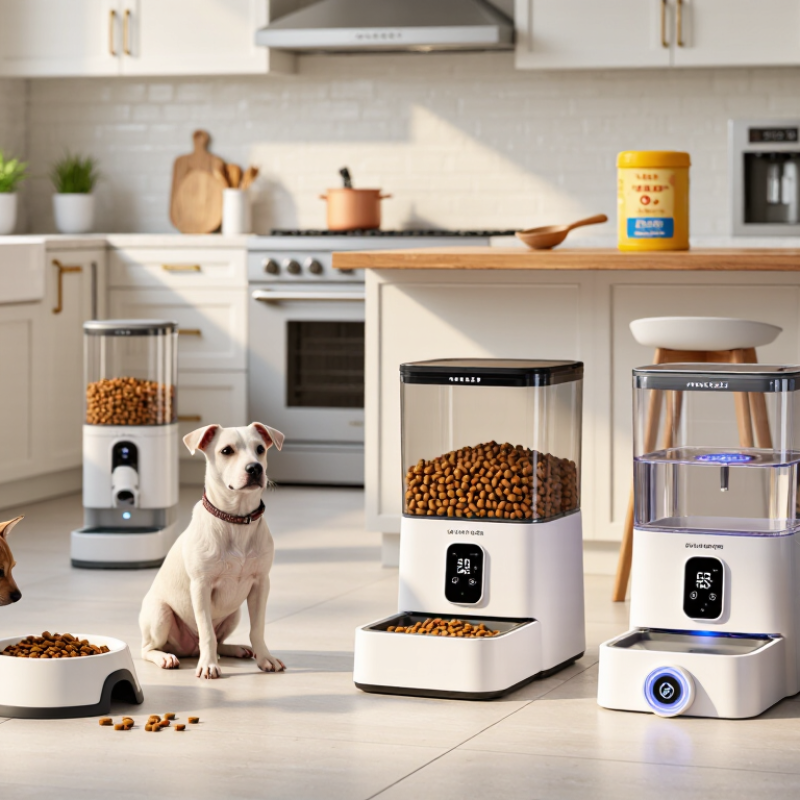
APOP reported that 59% of dogs and 61% of cats were overweight or obese in 2022. That is not a minor concern. Extra body fat can increase joint strain, diabetes risk, and breathing difficulty. A practical feeding plan matters more than clever technology. Veterinary guidance should set the daily calorie target.
Ten feeder types can support that plan: programmable portion feeders, timed carousel feeders, microchip feeders, RFID feeders, multi-pet feeders, slow feeders, puzzle feeders, refrigerated wet-food feeders, app-connected feeders, and locked-lid feeders. Programmable models divide food into several small servings. Slow and puzzle designs may reduce rapid eating. Microchip or RFID systems can stop one pet from stealing another’s meal. These features are useful, but they do not measure body fat accurately.
The Association for Pet Obesity Prevention recommends regular body-condition checks, while WSAVA charts help owners assess visible ribs, waist, and abdominal tuck. Weighing food with a kitchen scale is more reliable than using a scoop. Treat calories must also enter the daily calculation. A feeder can dispense 30 grams, but the wrong food can still exceed a pet’s needs. Gravity feeders often encourage grazing and may undermine weight control. That is easy to overlook. Weekly weight checks can reveal whether the plan works, although weight loss should remain gradual and veterinarian-guided. Data from the feeder may look precise, yet it cannot replace a physical examination or honest owner observation.
Automatic feeders can support a veterinary weight-loss plan when they deliver measured calories consistently. The American Animal Hospital Association recommends individualized calorie targets, so a veterinarian should calculate daily needs first. A timed feeder releases meals at fixed hours. A portion-controlled model measures each serving more precisely. Microchip and RFID feeders restrict access, helping prevent food stealing in multi-pet homes.
Other useful types include gravity, slow-feed, wet-food, refrigerated, multi-meal, and app-connected feeders. However, technology cannot correct an inaccurate portion. A cat needing 180 calories daily may gain weight if treats and stolen food remain uncounted. Microchip access also helps only when every pet has a registered identifier and the lid closes reliably. Test the device during supervised meals. Small failures matter.
Tips: Weigh food with a kitchen scale, not a cup. Divide the AAHA calorie plan into several meals when hunger is difficult. Record leftovers, treats, and changes in body weight each week. Clean food-contact parts often, especially with wet diets. Watch eating behavior closely. No feeder is perfect. Some pets learn to nudge, paw, or wait beside another feeder. If weight loss stalls for two or three weeks, review the portions with a veterinary professional rather than guessing.
| Feeder Type | How It Controls Access | Typical Food Compatibility | Timing and Portion Features | Best Weight-Loss Use | Pet-Identification Capability | AAHA Calorie-Plan Alignment | Main Limitation |
|---|---|---|---|---|---|---|---|
| 1. Timed Automatic Feeder | Opens or dispenses food at pre-set times using an internal clock. | Usually dry food; some models support semi-moist food for limited periods. | Several scheduled meals per day; portion depends on hopper calibration. | High | Usually none; any nearby pet may access the food. | Useful for dividing a veterinarian-prescribed daily calorie target into consistent meals. | Not suitable for households where pets steal each other’s food. |
| 2. Programmable Portion-Control Feeder | Releases a measured number of dispensing units at each meal. | Primarily dry kibble; accuracy varies with kibble shape and size. | Multiple meals with adjustable serving counts; requires weighing during setup. | Very High | Generally none unless combined with an identification system. | Supports precise daily gram targets after converting the prescribed kcal target using the food’s kcal-per-gram value. | “One portion” is not a universal weight; calibration is essential. |
| 3. Microchip-Activated Feeder | Opens only when the feeder recognizes a programmed implanted microchip or compatible tag. | Dry food and selected wet-food configurations. | Usually provides controlled access rather than precise scheduled dispensing; some versions include meal limits. | Very High | Yes; identifies an individual pet through a compatible microchip or collar tag. | Helps ensure that the pet assigned a calorie plan receives its measured ration instead of another pet’s food. | May not measure calories precisely unless food is pre-portioned. |
| 4. RFID-Tag Selective Feeder | Uses a radio-frequency identification tag on the pet’s collar to unlock the feeding area. | Dry food; some designs accommodate wet food. | Typically provides selective access and may maintain a covered feeding area. | Very High | Yes; recognizes an assigned RFID collar tag. | Effective for separating calorie-controlled meals in multi-pet homes when each ration is weighed first. | Requires collar compliance, batteries, and correct tag pairing. |
| 5. Smart Connected Feeder | Dispenses food through a programmed schedule controlled by onboard electronics or an app. | Most commonly dry kibble. | Schedules, portion settings, feeding alerts, and sometimes consumption records. | High | Usually no intrinsic pet identification; some systems support tags or separate sensors. | Improves adherence by recording meal delivery and helping caregivers maintain the planned daily schedule. | Connectivity does not guarantee that the intended pet consumed the food. |
| 6. Refrigerated Wet-Food Feeder | Uses covered compartments or cooling to present wet food at selected times. | Wet, canned, or prepared fresh food, depending on the compartment design. | Timed rotation or opening of individual meal compartments; portions are usually pre-measured. | High | Usually none; access control may require a separate enclosure or selective feeder. | Useful when the prescribed diet is wet food and each meal is weighed or measured before loading. | Capacity is limited, and food-safety instructions must be followed carefully. |
| 7. Multi-Pet Selective Feeder | Combines a covered feeding area with an access sensor, tag, or microchip reader. | Dry food and, in some designs, wet food. | Controls which pet can reach a pre-loaded ration; meal timing may be manual or programmable. | Very High | Often supports individual pet access through microchip or RFID recognition. | Strong option when one pet needs caloric restriction while other pets require different diets or amounts. | More complex and generally slower to load and clean than a basic timed feeder. |
| 8. Slow-Dispensing Feeder | Releases small amounts gradually through an auger, wheel, belt, or controlled opening. | Dry kibble; food size must match the dispensing mechanism. | Extends eating time and may divide a meal into many small releases. | Moderate to High | Usually none. | Can support a calorie plan by reducing rapid eating, provided the total daily quantity is weighed and controlled. | Slow delivery alone does not reduce calories and can cause frustration in some pets. |
| 9. Rotating Tray or Carousel Feeder | Moves pre-filled compartments into an accessible position at scheduled times. | Dry food and some wet-food formats, depending on tray design. | Several individually measured meals; commonly useful for overnight or multi-meal schedules. | High | Usually none; access is generally open to any nearby pet. | Allows a daily calorie allowance to be divided into controlled, pre-weighed meals. | Food may be accessible after the compartment opens unless the feeder is placed securely. |
| 10. Puzzle or Activity Feeder with Automatic Release | Combines scheduled dispensing with food-seeking, licking, or problem-solving activity. | Dry kibble, small treats, or suitable moist food depending on the puzzle design. | May deliver small portions over time rather than one large serving. | Moderate to High | Usually none; some can be placed inside a selective feeding area. | Supports calorie control while adding enrichment and activity, but all puzzle food must count toward the daily allowance. | Some pets need training, and the feeder may be unsuitable for pets with mobility or cognitive limitations. |
Managing pet weight starts with controlling access, portions, and eating speed. The Association for Pet Obesity Prevention’s 2022 report estimated that 59% of cats and 53% of dogs were overweight or obese. That makes feeder design more important than convenience alone.
The top ten useful types include timed, portion-control, gravity, microchip, RFID, camera, app-connected, slow-feed, puzzle, and refrigerated wet-food feeders. For multi-pet homes, microchip and RFID models can open for one registered animal, reducing food theft near the kitchen door. Timed and portion-control feeders divide meals into measured releases. Smart feeders can record intake, but their data still needs human checking. Apps are not perfect.
Slow-feed trays stretch a meal across ridges, while puzzle feeders make pets move, paw, or nudge for small portions. These designs may help fast eaters, although some anxious pets become frustrated. AAHA’s 2021 Nutrition and Weight Management Guidelines support individualized calorie plans and recommend keeping treats within 10% of daily calories. A feeder cannot calculate those calories reliably without accurate food data. I would weigh each portion with a kitchen scale, then watch body shape weekly. Refrigerated feeders suit wet food, but cleaning takes work. That matters. A dirty mechanism can spoil the routine. Weight loss also needs veterinary oversight, especially when appetite changes suddenly.
For pet weight loss, automatic feeders differ sharply in safety and portion control. Wet-food feeders usually use chilled compartments or sealed trays. They can serve measured meals without leaving food exposed all day. This matters for cats and small dogs that eat slowly. However, wet food can spoil if cooling fails or the tray stays warm. Wash removable parts after each use. A sour smell is a warning.
Gravity feeders are simpler. Food drops as the bowl empties. Their main advantage is convenience during short absences. Their weakness is precision. A hungry pet may repeatedly trigger the flow, eat too quickly, or guard the bowl. Kibble size can also change the amount released. One “cup” may not equal the same calories across foods. Use a kitchen scale, not only the feeder markings. Small differences matter over several weeks.
I prefer portioned automatic feeders for supervised weight-loss plans. Set a daily calorie target with a veterinarian, then divide it into several small meals. Record the actual food dispensed for three days. Some devices over-serve slightly. Check the tray before trusting the setting. Multi-pet homes need extra caution, because one animal may steal another’s meal. Feeders help, but they do not replace weighing the pet regularly. Some cats still gain weight despite carefully measured portions. That result deserves a feeding review, not blame.
Automatic feeders can make calorie control more consistent, but the scale tells you whether the plan is working. AAHA’s weekly targets are about 1–2% of body weight for dogs and 0.5–2% for cats. A 20-pound dog, for example, would aim to lose roughly 0.2–0.4 pounds in a week. Weigh pets on the same scale, at a similar time, and record the result. One reading can mislead.
Timed, portion-controlled feeders suit pets that eat dry food on a regular schedule. Check each portion with a kitchen scale; a dial setting is not always exact. Rotating-tray feeders can handle scheduled meals, including some wet foods, though food safety and cleaning matter. Microchip-activated feeders may help when one cat steals another’s meal. Gravity feeders are usually a poor fit for weight loss because food remains available. No feeder is magic.
Adjust portions with veterinary guidance, especially if your pet has a health condition or loses weight too quickly. If weekly loss exceeds the target, or weight does not change after several weeks, review calories and measurements with your veterinarian. Real life gets messy: treats, missed meals, and a curious second pet can quietly undo careful portions.
A portion-controlled feeder is usually easier to monitor. Set a daily calorie target with veterinary guidance. No feeder is magic.
Usually not. Food keeps flowing as the bowl empties, and hungry pets may eat repeatedly. Kibble size can also change each serving.
Weigh the dispensed food on a kitchen scale. Test it for three days and compare the amount with the feeder setting. Small gaps add up.
Some timed trays or chilled compartments can serve measured wet-food meals. Check that cooling works, and wash removable parts after each use. A sour smell is a warning.
Weigh your pet weekly on the same scale, at a similar time. Record each result; one reading can mislead.
Dogs often aim for about 1–2% of body weight weekly. Cats may aim for about 0.5–2%. Ask a veterinarian to guide the plan.
Separate feeding areas or consider a feeder that opens for a specific pet. Watch the bowls during meals. Check the bowl.
Review portions, treats, missed meals, and food sharing with your veterinarian. If weight loss is too fast, seek guidance promptly. Real life gets messy.
With 59% of dogs and 61% of cats overweight or obese, reliable meal management can be an important part of a veterinarian-guided weight-loss plan. Can automatic feeders help weight loss in pets? They can support consistent schedules and measured portions, but they do not determine the right calorie target. Timed and portion-controlled feeders help serve planned meals, while microchip and RFID models can limit access in multi-pet homes. Smart feeders may make schedules easier to manage, and slow-feed or puzzle feeders can encourage a more gradual pace of eating.
Feeder choice also depends on the food and the pet: wet-food feeders require attention to safe storage, while gravity feeders may offer less precise portion control. Compare each option with the calorie plan and track progress weekly. General targets often cited for weight loss are 1–2% of body weight per week for dogs and 0.5–2% for cats, but an animal health professional should guide the plan and help adjust it if progress is too fast or too slow.

MXI Paws